Just picky, or in dental pain? 3 telltale signs
只是挑食,還是牙痛?3 個關鍵跡象
When your pet suddenly starts eating less, it's tempting to put it down to fussiness. But a real change in appetite — especially the way they eat, not just what they eat — is one of the most common ways cats and dogs tell us their teeth hurt.
當您的寵物突然吃得少,容易歸咎於挑食。但食慾上出現真正轉變 — 尤其是進食方式,而非只是吃甚麼 — 往往是貓狗告訴我們牙齒在痛的方式之一。
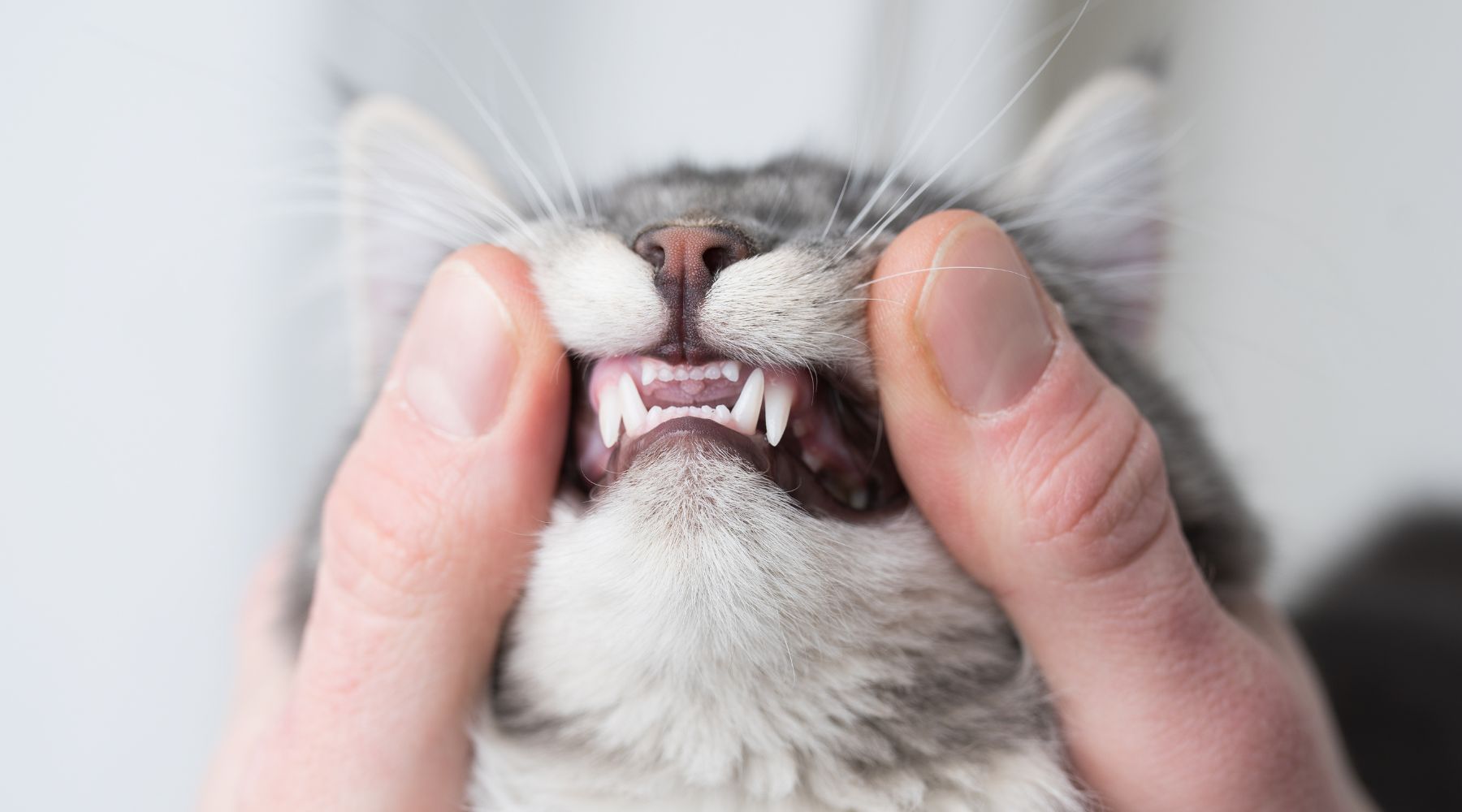
Cats and dogs have personalities and food preferences, just like we do. Some genuine fussiness is normal. What's not normal is a sudden, persistent change in how your pet approaches a meal. Dental pain is one of the most common reasons behind it — and because pets are stoic about pain, owners usually only notice the eating change, not the toothache underneath.
3 telltale signs your pet may be in dental pain
- Chewing on one side, eating slowly, or dropping food. If your pet keeps tilting their head, dropping kibble, or finishing meals far slower than usual, that often points to discomfort on one side of the mouth.
- Suddenly "soft food only." Refusing dry kibble and accepting only wet or softened food is a classic dental-pain pattern. Hard food puts more pressure on a sore tooth.
- Bad breath, drooling, or sensitivity around the mouth. Persistent bad breath, drool (especially if it's blood-tinged or smells unusual), pawing at the face, or flinching when you go near the muzzle are all signals worth paying attention to.
If you can gently lift the lip, a quick look at the gum line tells you a lot. Healthy gums are an even pale pink. Redness, swelling, bleeding, a brown line at the gum margin, or anything that makes your pet pull away is a reason to book a check.
Picky eating vs dental pain — how to tell the difference
Picky eating is usually about taste or routine. Dental pain shows up in how your pet eats. The two patterns look quite different:
- Normal picky eating. Your pet refuses certain foods but chews normally on what they accept. Body weight is stable. Nothing else is off.
- Dental-pain eating. Trouble chewing, food falling out of the mouth, drooling, bad breath, mouth sensitivity, and often weight loss over time. A pet that "still eats" can absolutely still have significant dental disease.
Two myths that delay treatment: "she's still eating, so her teeth must be fine," and "just switch to canned and the problem is solved." Both can mask a hidden, painful problem.
Why your vet — and dental X-rays — actually matter here
This is the part most owners don't realise: over half of dental disease in cats and dogs sits below the gum line and is invisible without dental X-rays. In cats specifically, studies suggest around 42% of dental issues can only be picked up by X-ray. By the time you see swelling or pus, the tooth root is often already badly affected.
That's why a proper dental visit isn't just a polish. A good dental work-up usually includes:
- Oral examination under anaesthesia. The only way to safely check every tooth.
- Dental X-rays. To find tooth resorption, hidden fractures, retained roots and root abscesses.
- Ultrasonic scaling and polishing. To remove plaque and tartar — including under the gum line — and to leave the tooth surface smoother so plaque takes longer to rebuild.
- Treatment of what's found. Sometimes a tooth needs to come out; sometimes it doesn't. A vet's exam plus X-rays is what tells you which.
Where daily home care fits
Professional scaling is the foundation. Daily home care is what makes the result last. The honest reality is that most owners can't brush every day, every tooth, with their pet's cooperation. A daily oral hygiene aid that can be applied alone along the gums, or with a toothbrush, beats a toothbrush that lives in the drawer.
Buccaclean® is a palatable, chlorhexidine-free dental gel with a soft applicator tip — designed exactly for that. It has received the VOHC® (Veterinary Oral Health Council) seal of acceptance in the category "Plaque Control Aid" for dogs, which means an independent body has reviewed the evidence and accepted the plaque-control claim. It is a sensible adjunct between professional cleans, not a replacement for them. Whether it's right for your pet, and how often to use it, is a conversation with your vet.
The takeaway — early detection, faster relief
If you're noticing any of those three signs at mealtime, it's worth a dental check. Pets in dental pain are uncomfortable for far longer than they let on, and the answer almost always involves a proper exam, dental X-rays and — if indicated — scaling under anaesthesia. From there, daily home care like Buccaclean® keeps the result going.
貓狗跟我們一樣,有自己的性格與口味喜好。輕微的挑食屬正常範圍;真正不尋常的,是進食方式上突然、持續的轉變。牙痛是常見的原因之一 — 由於動物本能地隱藏痛楚,主人往往只察覺進食方式改變,卻沒留意背後其實是牙齒在痛。
寵物可能牙痛的 3 個關鍵跡象
- 只用一邊咀嚼、進食緩慢或掉糧。若您的寵物經常側頭、掉飼料,或比平時慢很多才吃完,通常代表口腔某一邊不適。
- 突然「只肯吃軟食」。拒絕乾糧、只接受濕糧或軟食,是典型的牙痛模式。硬食會對痛牙施加更大壓力。
- 口臭、流口水或口腔附近敏感。持續口臭、流口水(尤其帶血絲或氣味異常)、抓臉,或當您靠近口部時退縮,都是值得留意的訊號。
輕輕翻開嘴唇,快速看看牙齦,能透露很多訊息。健康牙齦呈均勻的淡粉紅。發紅、腫脹、出血、牙齦邊緣有褐色線,或任何令寵物退縮的反應,都應該預約檢查。
挑食 vs. 牙痛 — 如何分辨
挑食通常關乎口味或習慣;牙痛則表現在寵物怎樣吃。兩種模式差異明顯:
- 正常挑食。寵物拒絕某些食物,但對接受的食物咀嚼正常。體重穩定,其他方面沒異樣。
- 牙痛式進食。咀嚼困難、食物從口中掉出、流口水、口臭、口腔敏感,並常伴隨長期體重下降。「仍會吃」的寵物,絕對仍可能有嚴重牙科疾病。
兩個延誤治療的迷思:「她仍會吃,牙齒應該沒事吧。」「轉罐頭就可以了。」兩者都可能掩蓋隱藏的、痛苦的問題。
為何獸醫 — 及牙科 X 光 — 在這裡至關重要
這是大多數主人不知道的:超過一半的貓狗牙科疾病位於牙齦線以下,沒有牙科 X 光根本看不見。在貓身上,研究顯示約 42% 的牙科問題只能透過 X 光發現。當您看到腫脹或膿時,牙根通常已嚴重受損。
所以正規的牙科診療不只是拋光。完整的牙科檢查通常包括:
- 麻醉下口腔檢查。唯一安全檢查每顆牙齒的方法。
- 牙科 X 光。用以發現牙齒吸收(tooth resorption)、隱藏骨折、殘留牙根及根部膿腫。
- 超聲波洗牙及拋光。清除牙菌膜及牙石 — 包括牙齦線下 — 並令牙面更光滑,延緩牙菌膜重新積聚。
- 因應發現的問題處理。有時需要拔牙,有時不用。獸醫檢查加上 X 光,才能告訴您是哪一種。
日常家居護理的角色
專業洗牙是基礎,日常家居護理是讓成果持久的關鍵。實際情況是大部分主人很難每日為寵物刷牙、刷遍每顆牙、又得到寵物合作。一款可直接塗於牙齦、亦可配合牙刷的日常口腔護理輔助產品,勝過放在抽屜裡的牙刷。
Buccaclean® 是一款適口性佳、不含 chlorhexidine 的牙科凝膠,配備柔軟塗抹頭 — 正為此而設計。它已獲 VOHC®(美國獸醫口腔健康委員會)認證,列入「Plaque Control Aid(牙菌膜控制輔助)」類別,適用於狗隻,意即獨立機構已審視證據並接受其牙菌膜控制聲明。這是專業洗牙之間合理的輔助,並非取代品。是否適合您的寵物、應該多頻使用,請與您的獸醫商討。
總結 — 及早察覺,更快紓緩
如您留意到上述三個進食時的跡象,值得安排牙科檢查。牙痛中的寵物所忍受的不適,通常遠超牠們所流露的。答案幾乎總包括正規檢查、牙科 X 光,以及在有需要時於麻醉下洗牙。其後,Buccaclean® 等日常家居護理能讓成果持續。
Spotting any of these signs at mealtime? The right next step is a dental check.
進食時察覺以上跡象?最合適的下一步,是預約牙科檢查。
Find a clinic尋找診所 → About Buccaclean®了解 Buccaclean®Adapted with permission from clinical content by Swanston Veterinary Hospital. None of this replaces an in-person veterinary assessment for your pet.
內容經朗晴動物醫院 Swanston Veterinary Hospital 臨床資料改編並獲授權使用。本文不能取代您寵物的當面獸醫評估。